How Metric Added Token Lists With Zerion API
Metric added Zerion API to easily build the token list for all connected wallets.

Metric is a DEX that prices pools to reality. Its trading experience needs to be equally smooth, starting with what a trader sees after connecting a wallet.
Metric integrates Zerion API to populate that wallet view, while its own infrastructure handles pool pricing and swaps.
What is Metric
Metric is a new decentralized exchange with active pools, where pricing and liquidity adjust to new information instead of waiting for arbitrage.
Its markets include tokenized stocks, forex, gold, and crypto majors. There are no added trading or frontend fees: the quote is the full price. Metric is live on Ethereum, BNB Smart Chain, and Robinhood Chain.
Metric crossed $25 billion in total trading volume within its first week after public launch.
The challenge
Metric launched across several EVM chains, including the newer Robinhood Chain. The token picker had to show a connected wallet’s holdings and their prices, while filtering away spam and dust.
That first screen also had to deal with spikes in traffic at public launch. Fetching balances is part of the path to every swap. So the wallet view needed to load fast even when more people connected.
Building the underlying data infrastructure would have meant maintaining indexers and price feeds for individual chains. For the team, this wallet data infra was a distraction.
So Metric chose Zerion API to supply that data.
The solution
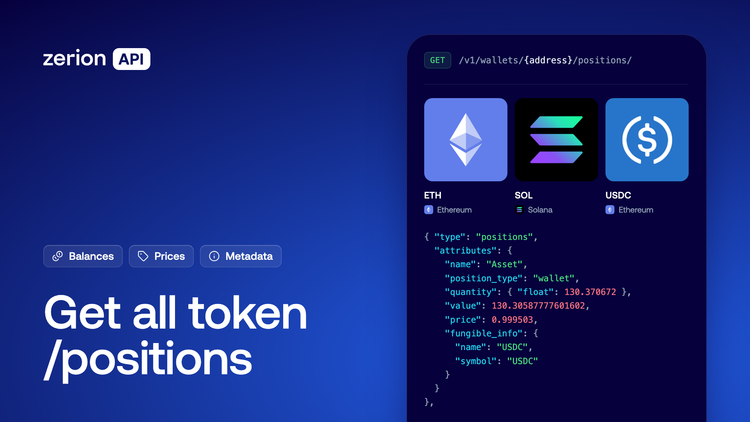
When a wallet connects, Metric uses the wallet address to call Zerion API’s wallet token positions endpoint, GET /v1/wallets/{address}/positions/
The endpoint returns positions across supported chains in one response. Each position includes the information needed to display the asset: its name, symbol, icon, USD value, price, and one-day price change.
For developers building a token picker, the endpoint offers several controls:
filter[positions]=only_simplereturns tokens held directly in the wallet (i.e. doesn’t include staked tokens and other protocol positions).filter[chain_ids]scopes the response to the selected chain.filter[trash]=only_non_trashexcludes tokens classified as trash, which is the default behavior.- Positions are sorted by value, putting the largest holdings first.
These capabilities let developers build a priced token list directly from the positions response.
In Metric’s flow, the trader connects a wallet, the app requests positions, and the token list appears. The trader then picks a pair, gets a quote from Metric and proceeds to the swap. Zerion supplies the wallet data for that first step; Metric supplies the trading quote.
The impact
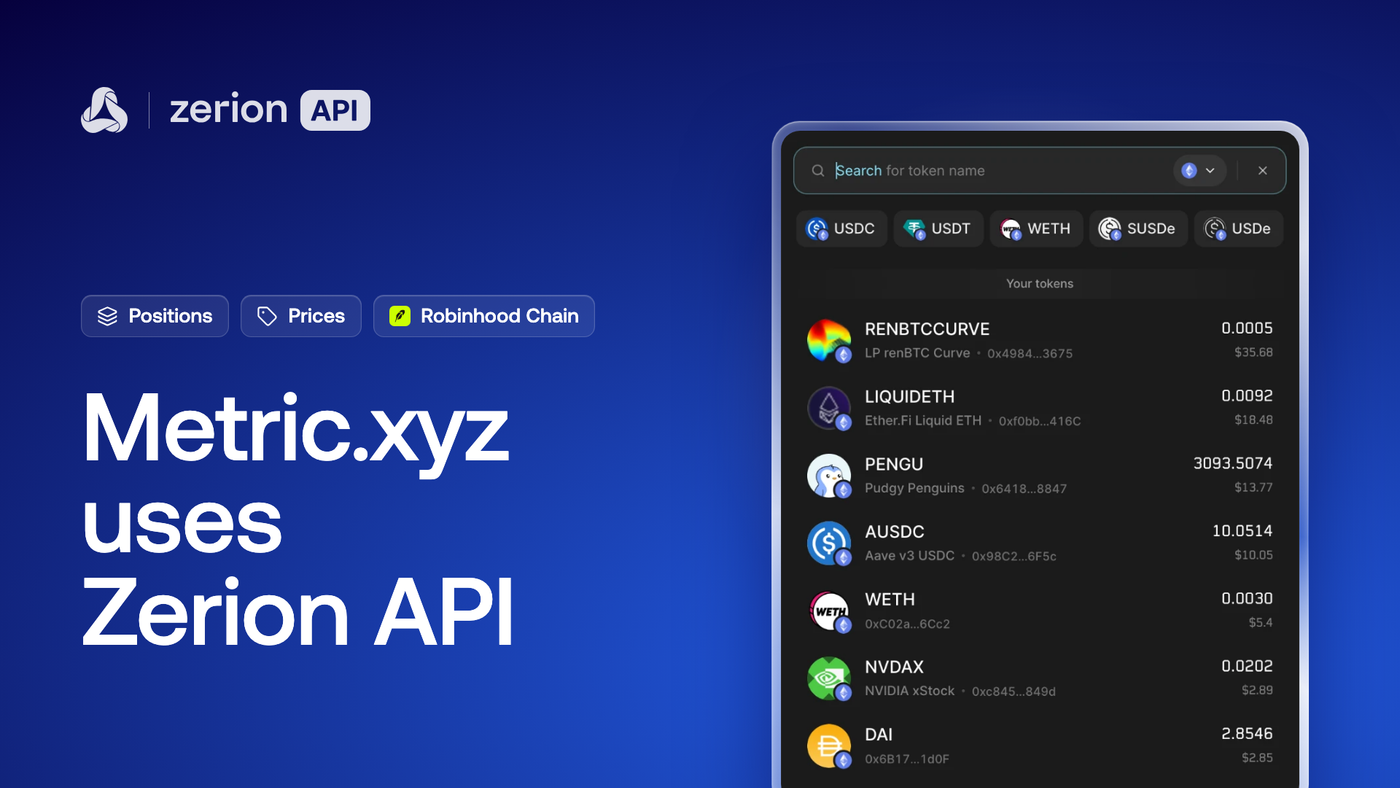
When a trader connects a wallet to Metric, they immediately see the tokens they can trade.
Zerion API handled the launch traffic, serving wallet balances as more traders connected and keeping the tokens responsive through the peak.
For Metric, using Zerion API removed the need to operate a separate stack of balance indexers and price feeds for this. The team keeps its engineering attention on Metric’s pools and pricing.
“We wanted traders to connect a wallet, see what they hold and get straight to choosing a swap. Zerion API gives us the balances, prices and token details for that first screen, so our team can focus on pools and pricing.” — Christos, CTO Metric
Try it
Metric needed wallet data as part of its trading experience. Zerion API’s positions endpoint supplies everything for the token list that helps traders move from connecting a wallet to choosing a swap.
If you’re building a product where a user connects a wallet with assets, start by showing positions they need to see. Create a free dev key for Zerion API today.

Written by
Vladimir ShamanovVladimir has been working full-time in blockchain and crypto since 2018. Before that, he was in financial communications. He holds a BSc in Management from the LSE.
More from Vladimir Shamanov